

Most homeowners only think about their HVAC system when something goes wrong. A sweltering July bedroom, a heating bill that doubles in January, or a unit that runs constantly but never quite gets the house comfortable. When it's finally time to choose right hvac system home decisions, the sheer number of options, ratings, and contractor opinions can make the process feel impossible. This guide cuts through that noise. You'll learn what to assess before you buy, which system types actually fit different homes, how sizing works, and what efficiency numbers really mean for your wallet.
Table of Contents
- Key takeaways
- How to choose the right HVAC system for your home
- Types of home HVAC systems
- Why HVAC sizing is more important than brand
- Efficiency ratings and technology that actually matter
- How to choose a qualified HVAC contractor
- My honest take after years of HVAC work
- Get expert HVAC guidance from Bravomechanicalny
- FAQ
Key takeaways
| Point | Details |
|---|---|
| Assess your home first | Square footage, ductwork, insulation, and local climate determine which system works before any brand comparison. |
| Sizing beats brand name | Proper Manual J load calculations prevent short cycling, humidity problems, and wasted energy. |
| Efficiency ratings save money | SEER2, HSPF2, and AFUE ratings directly predict monthly operating costs over the system's lifetime. |
| Heat pumps outperform furnaces | In many climates, heat pumps can be 2-4x more efficient than traditional heating, saving roughly $1,500 per year. |
| Contractor quality is everything | Licensing, NATE certification, and a commitment to load calculations separate good installs from expensive mistakes. |
How to choose the right HVAC system for your home
Before you look at a single spec sheet, you need to understand your home. The right system fits layout, ductwork, and comfort goals rather than just cost or rating. Skipping this step is exactly how homeowners end up with expensive equipment that still leaves the upstairs too hot and the basement freezing.
Here are the key factors to work through before you start comparing systems:
- Home size and layout. Square footage is the starting point, but layout matters just as much. Open floor plans distribute air differently than homes with many small rooms and long hallways.
- Existing ductwork. If your home already has ducts in good condition, a central split system is a natural fit. If you're adding a room or dealing with a home that was never ducted, a ductless option becomes far more practical.
- Local climate. Westchester County, NY, sees genuine winters and humid summers. A system that performs well in mild climates may struggle here. Cold climate performance ratings matter more than you might expect.
- Energy costs and utility rates. Your local electricity and gas rates directly affect whether a heat pump or a gas furnace will cost less to run over time. Check your utility bills before committing.
- Indoor air quality needs. Households with allergies, asthma, or pets benefit from systems with better filtration and humidity control built in.
- Budget and available rebates. Federal tax credits and utility rebates for high-efficiency equipment can shift the math significantly. The Inflation Reduction Act currently offers up to $2,000 in tax credits for qualifying heat pump installations.
Pro Tip: Before calling any contractor, pull your last 12 months of utility bills. This gives you a real baseline for comparing operating costs between system types, not just purchase prices.
Types of home HVAC systems
Understanding your options is the core of any HVAC system buying guide. Each system type has a specific use case, and choosing the wrong category wastes money no matter how high the efficiency rating.
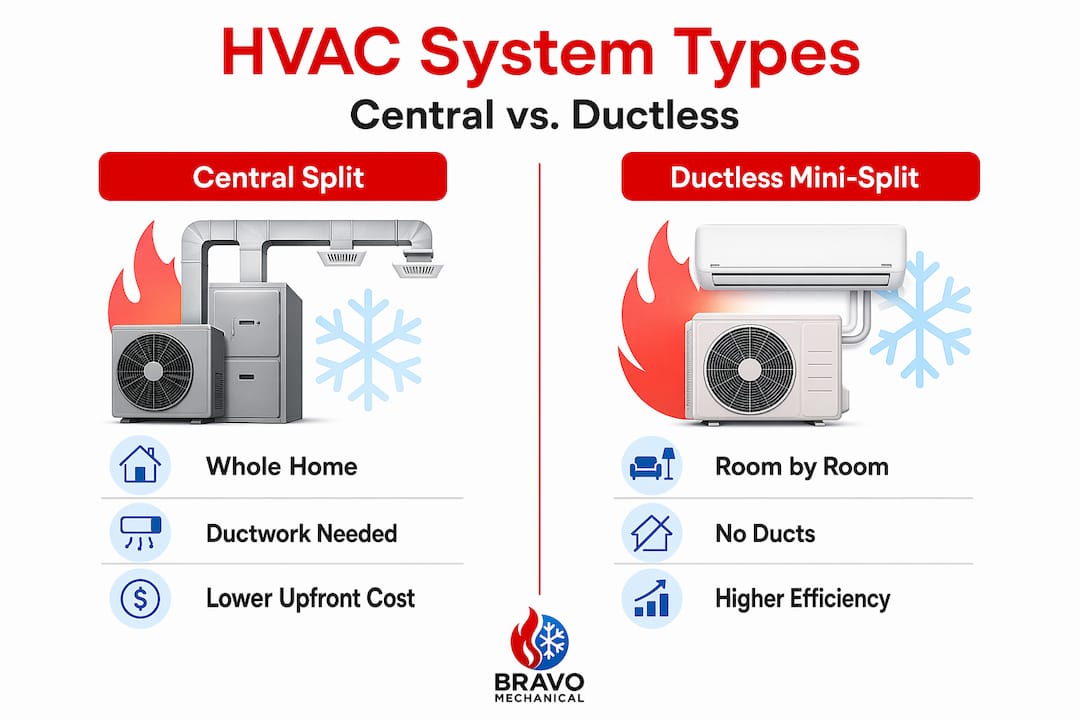
| System Type | Best For | Efficiency Range | Key Drawback |
|---|---|---|---|
| Central split system | Homes with existing ductwork | SEER2 14-22+ | Duct leakage reduces efficiency |
| Heat pump (air-source) | Moderate to cold climates | SEER2 15-22, HSPF2 8-12 | Older models lose efficiency below 20°F |
| Geothermal heat pump | High efficiency priority, larger budgets | Up to 400% efficiency | High upfront installation cost |
| Ductless mini-split | Additions, older homes, no ductwork | SEER2 15-30+ | Higher per-zone equipment cost |
| Packaged unit | Small homes, limited mechanical space | SEER2 14-18 | Less efficient than split systems |
Central split systems remain the most common setup in American homes. A furnace or air handler sits inside, a condenser unit sits outside, and conditioned air travels through ducts. They work well when ductwork is in good shape, but leaky ducts can waste 20-30% of conditioned air before it reaches the living space.
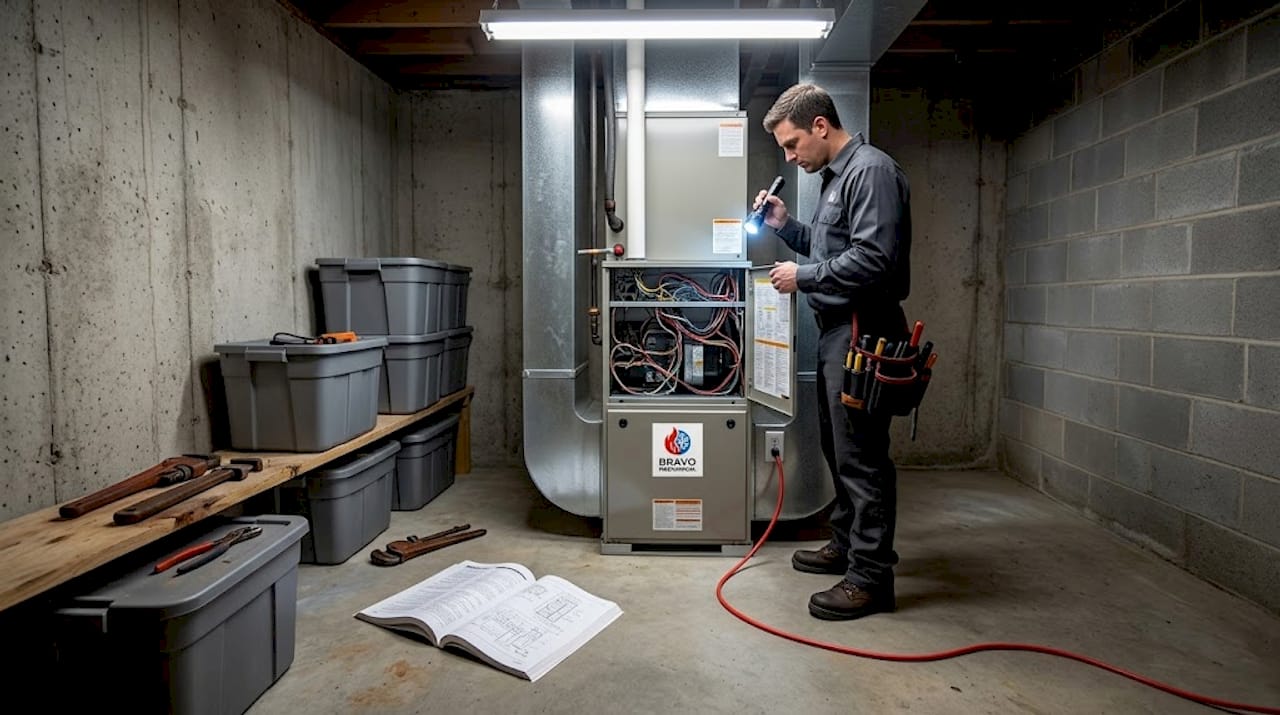
Heat pumps are worth serious attention. They move heat rather than generate it, which is why heat pumps can be 2-4x more efficient than electric resistance heating and can save roughly $1,500 annually in colder climates. Modern cold-climate models with inverter technology maintain performance down to -22°F. If you're comparing options for Westchester winters, read through the heat pump vs. furnace cost breakdown for a local perspective.
Ductless mini-splits solve a specific problem: how to heat and cool spaces without ductwork. Running multiple window AC units costs up to $100 more per month in larger homes compared to a properly sized mini-split system. For homes with three or more bedrooms, the efficiency advantage compounds quickly. Professional mini-split installation also gives you zoning, so you only condition the rooms you're actually using.
Why HVAC sizing is more important than brand
This is where most homeowners and even some contractors get it wrong. Bigger is not better. An oversized system cools or heats the space so quickly that it shuts off before it can properly dehumidify the air. You end up with a cold, clammy house in summer and short cycling that wears out components years ahead of schedule. An undersized system runs constantly and still can't keep up on the hottest or coldest days.
Improper sizing is one of the most common HVAC installation errors, and it directly reduces both comfort and efficiency. The fix is a formal Manual J load calculation, which is the industry standard method for determining exactly how much heating and cooling capacity a specific home needs.
Here's what a proper load calculation accounts for:
- Square footage and ceiling height. Volume matters more than floor area alone.
- Insulation levels. Walls, attic, and basement insulation dramatically affect heat gain and loss.
- Window size, orientation, and glazing. South-facing glass in a Westchester home adds significant solar heat gain in summer.
- Air leakage. Older homes with drafty envelopes need more capacity than tight new construction of the same size.
- Occupancy and internal heat sources. Appliances, lighting, and the number of people in the home all factor in.
Pro Tip: Ask every contractor you interview one simple question: "Will you perform a Manual J load calculation before recommending equipment size?" If they say no or seem unfamiliar with the term, move on. Reliability ties directly to proper sizing and installation quality, not just the brand on the unit.
Efficiency ratings and technology that actually matter
Choosing HVAC for energy efficiency starts with understanding three ratings. They sound technical, but each one translates directly to your monthly bill.
- SEER2 (Seasonal Energy Efficiency Ratio 2) measures cooling efficiency. Higher numbers mean lower cooling costs. The current federal minimum is 14.3 SEER2 for most of the country. A system rated 18 SEER2 will cost noticeably less to run than a 14.3 SEER2 unit over a 15-year lifespan.
- HSPF2 (Heating Seasonal Performance Factor 2) measures heat pump heating efficiency. Look for 8.5 or higher for meaningful savings in cold climates.
- AFUE (Annual Fuel Utilization Efficiency) applies to gas and oil furnaces. A 96% AFUE furnace wastes only 4 cents of every dollar of fuel. An older 80% AFUE unit wastes 20 cents.
Beyond the ratings, inverter technology is the single biggest upgrade in modern HVAC. Traditional compressors run at full speed or not at all. Inverter-driven compressors adjust their speed continuously, matching output to actual demand. Advanced inverter technology enables up to 40% energy savings and maintains heat pump performance even in extreme cold. The practical result is steadier temperatures, better humidity control, and quieter operation. Inverter-driven units reduce compressor noise significantly, which matters if your outdoor unit sits near a bedroom window or a home office.
One thing worth knowing: high-efficiency systems with inverter technology also produce more consistent indoor humidity levels. In a humid Westchester summer, that difference is noticeable within the first week.
How to choose a qualified HVAC contractor
Even the best equipment fails when it's installed poorly. Choosing a qualified contractor is just as important as choosing the right system, and the selection process deserves the same rigor.
Follow these steps when evaluating contractors:
- Verify licensing and insurance. In New York, HVAC contractors must hold a valid state license. Ask for it. Confirm they carry liability insurance and workers' compensation.
- Look for NATE certification. North American Technician Excellence (NATE) certification means the technician has passed independent testing on HVAC installation and service. It's the clearest third-party signal of technical competence.
- Get at least three written estimates. Estimates should specify equipment model numbers, SEER2/HSPF2 ratings, warranty terms, and whether a Manual J calculation is included.
- Ask about post-installation testing. A quality installation includes airflow testing, refrigerant charge verification, and a walkthrough of system controls before the technician leaves.
- Understand the warranty structure. Most manufacturers offer 10-year parts warranties, but only if the equipment is registered within 60 to 90 days of installation. Labor warranties vary by contractor.
"When a repair bill starts approaching half the cost of a new system, replacement usually wins financially. The '50% rule' is a practical benchmark: if the repair cost exceeds 50% of replacement cost, put that money toward new equipment instead."
Also ask about maintenance plans before the install is complete. Scheduling annual tune-ups from the start protects your warranty and keeps efficiency from degrading. Consistent HVAC maintenance is one of the highest-return investments you can make in a new system.
My honest take after years of HVAC work
I've seen hundreds of homeowners make the same mistake. They spend weeks comparing brand names and SEER ratings, then hire the cheapest contractor and end up with an improperly sized unit that causes problems within the first two years. The brand matters far less than most people think.
What actually drives satisfaction is the combination of correct sizing, quality installation, and a system that matches the specific characteristics of the home. I've watched a mid-tier heat pump installed correctly outperform a premium unit that was oversized by two tons. Reliability is more tied to proper sizing and maintenance than brand name alone, and that matches everything I've seen in the field.
My other honest observation: homeowners in colder climates consistently underestimate heat pumps because of old assumptions. Modern cold-climate inverter heat pumps are genuinely different from what was available a decade ago. If someone tells you a heat pump won't work in a Westchester winter, ask them when they last installed one. The technology has moved.
The best system for your home is the one sized correctly for your specific load, installed by someone who knows what they're doing, and maintained on a regular schedule. That combination beats any brand comparison every time.
— Brahyan
Get expert HVAC guidance from Bravomechanicalny
Choosing the right system is only half the work. The other half is having a team that installs it correctly and stands behind it.
Bravomechanicalny serves homeowners across Westchester County with heat pump installation, furnace installation, and mini-split systems tailored to the specific demands of New York's climate. Every project starts with a thorough diagnostic process, proper load calculations, and clear communication about your options before any equipment is ordered. With a 5.0 Google rating and a track record of measurably improved comfort and efficiency across the county, Bravomechanicalny brings the technical rigor this decision deserves. Explore the full range of HVAC services in Westchester or call to schedule your consultation today.
FAQ
What is the best HVAC system for a home in a cold climate?
Heat pumps with inverter technology are the top choice for cold climates in 2026. Modern cold-climate models maintain efficiency down to -22°F and can save approximately $1,500 annually compared to traditional electric or oil heating.
How do I know what size HVAC system my home needs?
A qualified contractor should perform a Manual J load calculation that accounts for square footage, insulation, ceiling height, window placement, and air leakage. Never accept a size recommendation based on square footage alone.
What does SEER2 mean and why does it matter?
SEER2 is the current federal standard for measuring cooling efficiency. A higher SEER2 rating means lower electricity costs to cool your home, and the difference compounds significantly over a 10-15 year system lifespan.
Are ductless mini-splits worth the higher upfront cost?
Yes, for homes without existing ductwork or for room additions. Running multiple window units can cost up to $100 more per month in larger homes, so a mini-split system typically pays back the cost difference within a few years.
When should I replace my HVAC system instead of repairing it?
Use the 50% rule: if the repair cost exceeds 50% of the replacement cost of the system, replacement is usually the smarter financial decision. Age also matters. Systems older than 15 years rarely justify major repairs.